

Wild Columbine
Marlbank, ON
Inspiration
Want to be inspired like we are? Have a look into the following material and get excited!
The Grandfather of the Movement
While my personal inspiration comes from a deep-seated love for wildlife and our natural areas, I was easily the most inspired to get a move-on and start making real impacts when I stumbled upon this intriguing entomologist, Doug Tallamy.
Doug Tallamy is a professor and ecologist and is the man behind Homegrown National Park, an effort to have homeowners register their land with the program and begin to actively improve their own land, whether that is a 50 acre acreage or a small backyard that is 0.1 acres. The key being that accumulatively, we can improve more land working together with our residential properties, and can make a massive impact on our earth, our flora and fauna.
You can learn more about Doug and his philosophy by watching any number of his presentations for free across YouTube. See below for an example on the Wildr channel, a partner of Homegrown National Park.
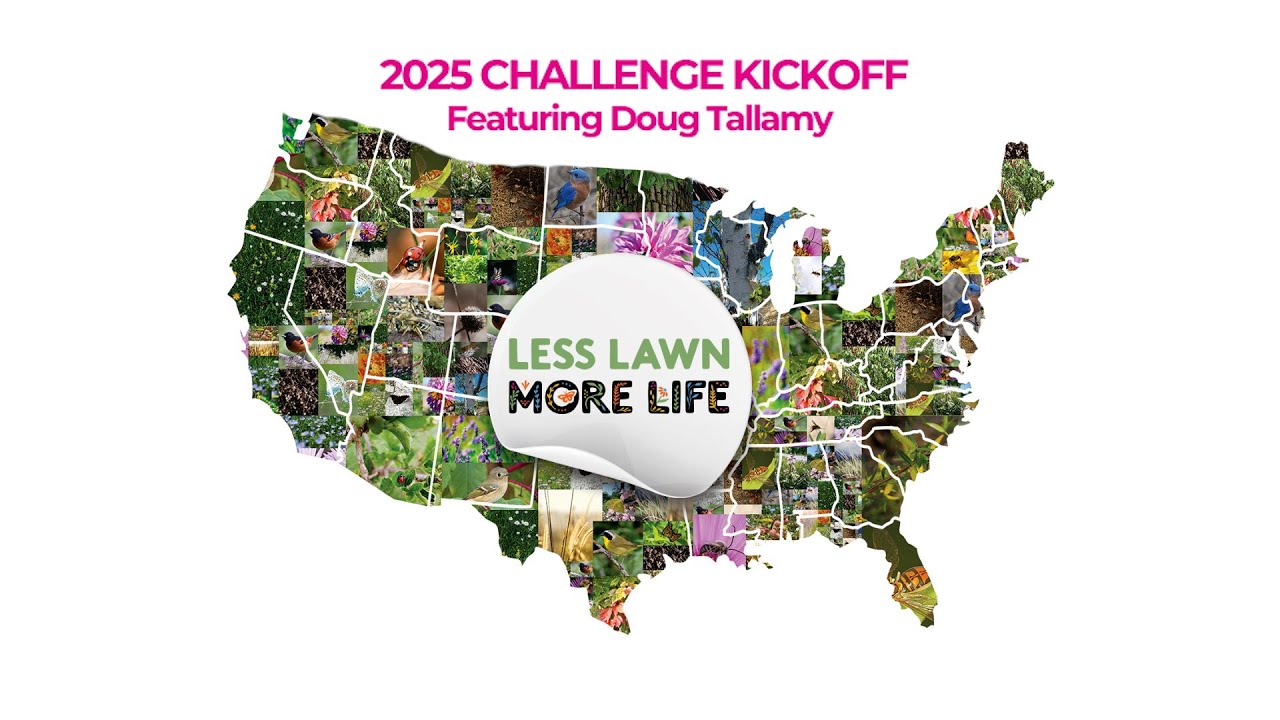
Less Lawn More Life 2025 Kickoff with Doug Tallamy!
Outside of Doug's general philosophy, which is shown throughout the video above and any number of others that you can find through a simple YouTube search, he has also authored 4 of his own books, each one providing a wealth of knowledge into the general movement of rewilding with native plants.
His first book, Bringing Nature Home: How Native Plants Sustain Wildlife in our Gardens, pairs incredibly well with his second, Nature's Best Hope: A New Approach to Conservation that Starts in Your Yard. Each describe the same general concept of information and personal study on the re-introduction of native plants and the incredible impact it makes on native wildlife. This is at the heart of his movement to create Homegrown National Park (https://homegrownnationalpark.org/).
That being said, his third, The Nature of Oaks: The Rich Ecology of Our Most Essential Native Trees, gets into a whole lot more ecology and species specifics. The Oak tree family, our most influential and powerful family in North America, brings with it the highest number of insects that depends on it. From there, the foodweb expands and life is carried from the power of the sun, to living beings. This third book is a tougher read, but it allows us to focus on planting native plants that make the highest impact. So if you only have enough space for one or two trees, consider the oaks, as this will make the highest impact in your yard and your general vicinity. You can learn more about this here, in the following video:

Doug Tallamy: The Nature of Oaks
His fourth and most recent book, How Can I Help?: Saving Nature with Your Yard, is almost like a long-form FAQ on bringing nature into your yard and your neighbourhood. It's a fantastic, straightforward look at improving our spaces.
Outside of this, you can find inspiration in so many other places. Local conservation authorities are a wealth of knowledge and will know incredible information about your local area. Other planting businesses, like this one, inspiring videos and stories of planting trees, forests and native fields across the globe. I personally find an incredible amount of inspiration in my own yard. As I work to improve my 2.75 acres, I have found immense joy in watching my Red, Burr and White Oak trees grow from seedlings to roughly 14' tall. I have watched as specific species of wasps create galls in the leaves for their young. I have watched moths munch away on fresh green leaves and fall warblers flit through the trees scouring them for a snack as they continue their journey south.
Possibly more inspiring has been watching a previous mowed lawn, transform into a wild meadow. The most powerful native flower, Goldenrod, has overtaken roughly half an acre of space and has blossomed from July all the way into September. Joe-Pye-Weed has taken over our creekside, another area we previously mowed for a 'tidy' look. This brings in such incredible pollinators and predators for a brief 3 weeks or so. Asters have filled our meadow, as well as our transitional areas, also sticking late into the fall, providing a little boost for our pollinators before they prepare for winter.
The more I have learned about native species and seen them colonize our property all on their own has been the biggest inspiration. Nature will fight back and will win in the end, we simply have to let it occur and give it all the help it can get!